
You just had a concussion. Maybe you took a hit in sports, fell at work, or were in an accident. Right now, you might be dealing with headaches, brain fog, dizziness, or that unsettling feeling that something’s just… off.
Here’s what you need to know: recovery isn’t just about resting and waiting. Post-Concussion Syndrome (PCS) is complex—it’s not one simple injury but a disruption of how your brain regulates blood flow, processes sensory input, manages energy, and rebalances itself. The good news? Modern neuroscience has shown us exactly how to help your brain rebuild that balance.
At NCX Brain Recovery, every element of our program is grounded in proven research. We’re not guessing—we’re using science to help you heal.
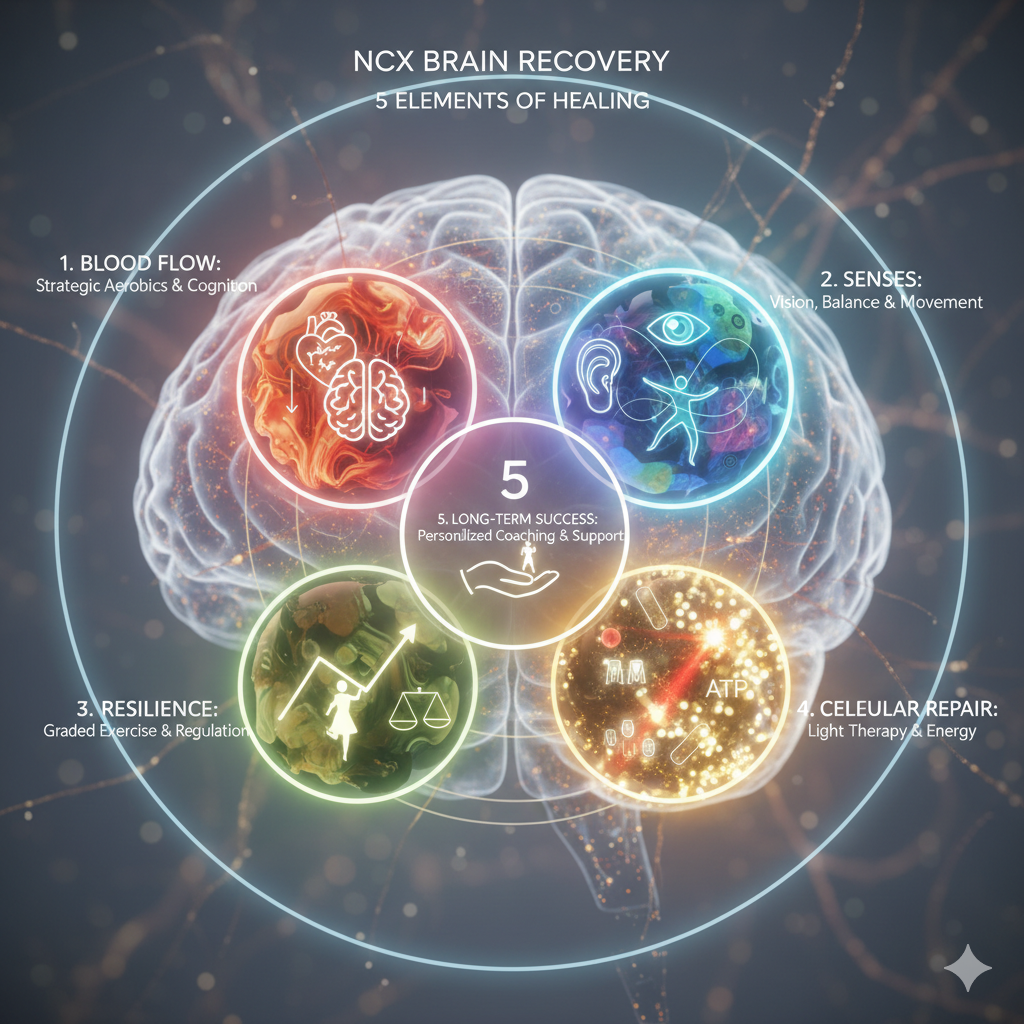
Element 1: Restoring Your Brain’s Blood Flow
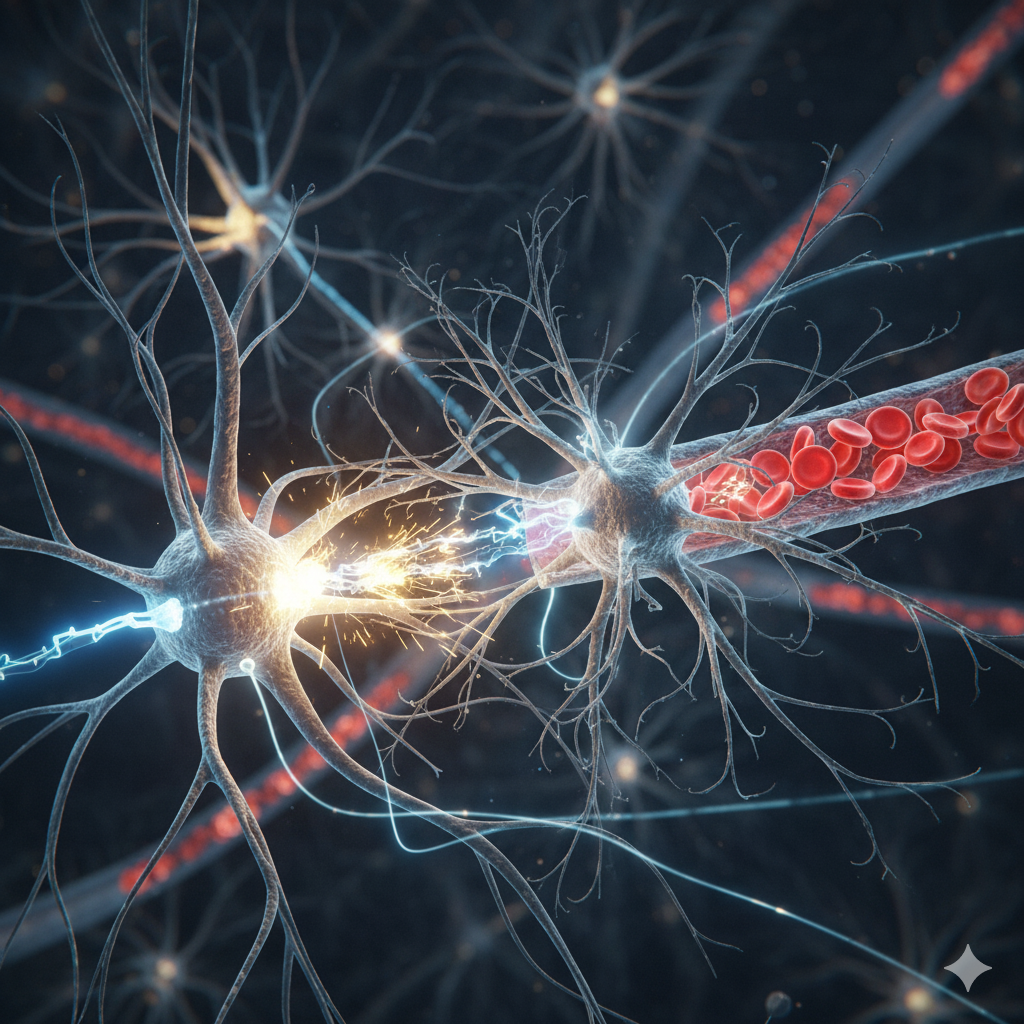
After a concussion, your brain loses one of its most important abilities: matching blood flow to what you’re actually doing. This is called neurovascular coupling, and when it breaks down, the results can be frustrating and scary.
What this means for you: You might get headaches that won’t quit. Brain fog that makes work impossible. Dizziness that throws off your balance. Some people feel their heart racing or struggle to regulate their body temperature. Others are exhausted after the smallest activity—even a walk around the block leaves them wiped out.
How we help: We combine carefully timed aerobic exercise with cognitive tasks to help your brain relearn how to match blood flow to what you’re doing. It’s not random exercise—it’s strategic, gradual, and designed to rebuild that connection. As your neurovascular coupling improves, something remarkable happens: your energy returns, your focus sharpens, and those frustrating symptoms start to fade.
Research shows this works: A neuroimaging study from The Open Neuroimaging Journal found that targeting neurovascular uncoupling can rapidly restore blood-flow regulation and reduce long-term symptoms (Wing et al., 2017).
Element 2: Rebuilding How Your Senses Work Together
One of the strangest parts of PCS? Everything feels unstable. Your vision might be blurry. The room feels like it’s tilting even when it’s not. You might feel clumsy or “off” without understanding why.
This happens because your brain isn’t integrating sensory information the way it should. Vision, balance, and body awareness normally work together seamlessly—but after a concussion, those systems get disconnected.
How we help: Our multisensory integration therapy uses a progression of vision, vestibular (balance), and proprioceptive training to retrain how your sensory pathways communicate. We’re literally helping your brain relearn how to see, balance, and move with confidence again.
The SAVE Program study found that integrated visual, auditory, and proprioceptive training significantly improved attention, fatigue, sleep, and visual comfort in PCS survivors (Drake et al., 2020).
Element 3: Rebuilding Your Resilience Through Movement
Your nervous system got shaken. It’s stuck in survival mode, giving you symptoms like fatigue, a racing heart, or exercise intolerance. You want to feel normal again, but your body won’t cooperate.
Post-Concussion Syndrome disrupts your autonomic nervous system—the system that controls your “fight or flight” response and your ability to rest and recover. Getting these two halves back into balance is essential.
How we help: We customize aerobic exercise just below your symptom threshold, carefully rebuilding your endurance. This isn’t about pushing hard. It’s about strategic, gradual progression that teaches your nervous system how to regulate itself again. As you rebuild, your symptoms decrease and your ability to handle daily life improves.
The “Exercise Is Medicine” model from the University at Buffalo shows that graded sub-symptom activity improves brain blood flow and nervous system balance in PCS (Leddy et al., 2010)..
Element 4: Supporting Cellular Healing with Light Therapy
Here’s something many people don’t realize: your brain cells are power-hungry. They need enormous amounts of energy to function. When you have a concussion, the injury disrupts your mitochondria—the “power plants” inside your cells—and triggers inflammation. Your brain is literally running low on fuel.
This is why so many people with concussions feel that crushing fatigue. Their brain is working overtime to recover, but the energy systems are damaged.
How we help: We integrate photobiomodulation (PBM)—near-infrared light therapy—to recharge your mitochondrial function, reduce inflammation, and boost ATP production (the energy your cells use). This supports your brain’s energy metabolism directly, helping you heal faster and feel better sooner.
Recent controlled studies found that PBM improved cognition, sleep, pain, and overall function in mild TBI patients. Studies have shown improvements in cognitive function, regional cerebral blood flow, and symptom reduction (Naeser et al., 2016; Chao et al., 2020).
Element 5: Supporting Long-Term Success with Aftercare Coaching
Feeling better in our clinic is one thing. Staying better in your real life is what matters.
Lasting recovery isn’t just about symptom management—it’s about rebuilding your life and making sure those improvements stick. That’s why we don’t just discharge you when you feel better. We provide a personalized at home program and an 8 week aftercare program to ensure your brain keeps adapting, learning, and thriving.
We’re here to help you maintain your progress and integrate what you’ve learned back into work, school, sports, and everything else that matters to you.
Recovery Isn’t About Symptom Management—It’s About Restored Life
Here’s the truth: you don’t just want to get back to baseline. You want your life back. You want to think clearly, move confidently, and feel like yourself again.
Post-Concussion Syndrome is complex, but it’s also treatable. By combining neurovascular repair, sensory reintegration, autonomic re-regulation, cellular repair, and personalized coaching, we help you move beyond managing symptoms and toward truly restored function.
If you’re struggling with a recent concussion or lingering post-concussion symptoms, you don’t have to white-knuckle through recovery. Science shows there’s a better way.
We’re here to help you heal.
The Research Behind Our Approach
The elements above aren’t just our ideas—they’re grounded in peer-reviewed neuroscience research from leading institutions and rehabilitation centers. We’ve highlighted key studies here, but there’s substantial additional research supporting each component of recovery. This article represents snapshot’s of the evidence that informs our practice, not an exhaustive review.